








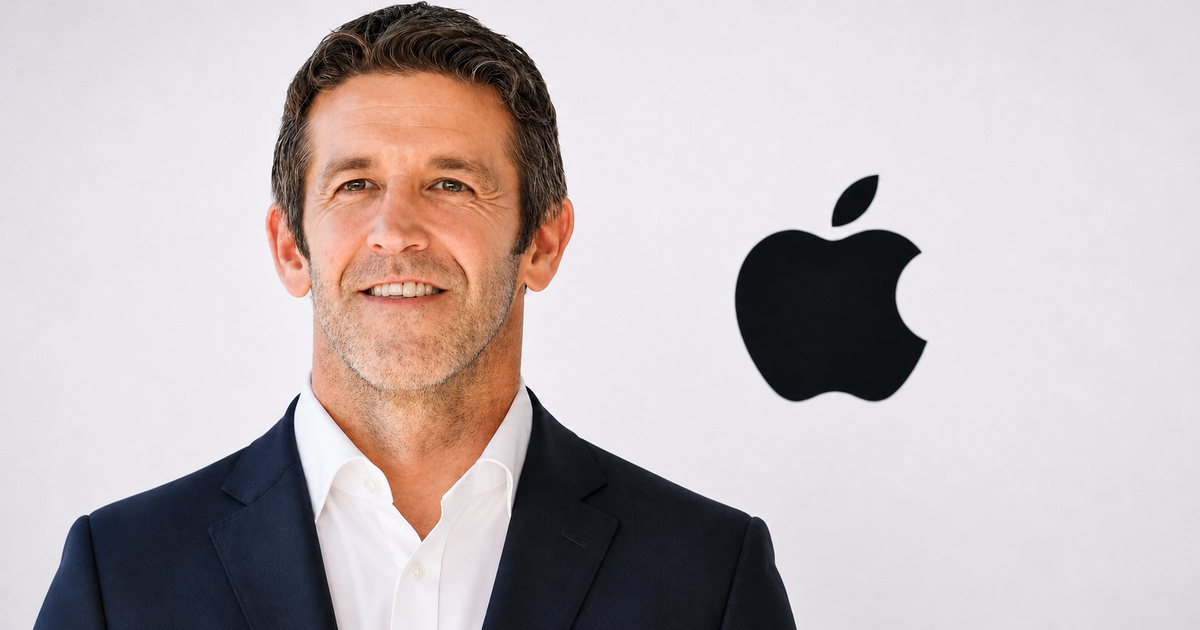
Engineers make great CEOs when technical depth shortens the distance between a product problem and a capital decision. An engineer CEO can test assumptions, see hidden dependencies and challenge impossible schedules. That advantage matters only when it is paired with customer judgment, communication, talent leadership and financial discipline. Engineering is useful evidence of how someone thinks. It is never a complete CEO qualification.
That is the practical answer behind a LinkedIn post that reached 259,731 impressions, 1,128 reactions and 264 comments. The post asked whether an engineer was the CEO Apple needed after John Ternus succeeded Tim Cook. Apple confirms the succession. The harder question is how a board should judge the operating value of Ternus's background after the announcement fades.
 in
in
“Apple just replaced Tim Cook. The details are wild. Here are the 7 craziest facts about the new CEO:”
Why Engineers Make Great CEOs in Product Companies
A technical leader can compress three expensive conversations. The first concerns feasibility: what the product can do within the laws of physics, software and supply. The second concerns sequence: which dependency must move before a launch promise becomes real. The third concerns tradeoffs: which quality, cost or schedule compromise creates a debt the company will pay later.
Apple's board made its own rationale explicit. It cited Ternus's deep technical knowledge, leadership and focus on products. The company announced that he would become CEO on September 1, while Cook would become executive chairman. The transition followed a long succession process and kept Cook involved in selected company matters, including engagement with policymakers.
Apple's official succession announcement states the effective date, board decision and the responsibilities Cook retains.
What John Ternus Actually Brings
Apple's current leadership biography says Ternus joined the product design team in 2001, became a hardware engineering vice president in 2013 and entered the executive team in 2021. It credits him with work across iPad, AirPods, iPhone, Mac and Apple Watch, along with reliability, durability, materials and repairability initiatives. His degree is in mechanical engineering.
Those facts show a long product apprenticeship inside one operating system. They do not prove that every product decision was his, that technical leaders always outperform commercial leaders or that a credential caused Apple's results. The source post also says he is named on 403 patents. I could not confirm that number from a current primary record, so it is excluded from the argument.
Apple's investor site publishes the current John Ternus leadership biography and his documented career path.
The CEO Job Is a Decision System
A CEO rarely wins by personally solving the hardest technical problem. The role is to make the company solve the right problem, fund it at the right level and stop work that no longer earns its constraints. Technical fluency helps because experts can explain fewer layers of abstraction. It hurts when fluency becomes permission to overrule the people closest to new evidence.
The useful test is decision quality. Ask what information reached the CEO, which assumptions were separated from facts, who owned the recommendation and what would trigger a reversal. A leader from engineering should be able to make this chain unusually clear. If every difficult choice still depends on personal intuition, the company has gained a talented bottleneck.
I use the same principle in smaller operating systems. Give each recurring decision an owner, an evidence source, a deadline and an escalation rule. Preserve the reasoning beside the outcome. The system should let another capable person challenge the choice without rebuilding months of context from memory.
What Apple's Functional Model Changes
Apple has described itself as a functional organization led by experts, rather than a collection of autonomous business units with separate general managers. Leaders are expected to understand details several levels below them, debate across functions and combine expertise around products. That structure increases the value of a CEO who can follow technical arguments without turning every debate into a translation exercise.
It also makes integration harder. Hardware, software, services, operations, finance and marketing can each be locally correct while the customer experience fails as a whole. The CEO must resolve choices that no function can settle alone. Product expertise gives Ternus a strong starting point. His performance will depend on whether the full system makes better integrated decisions.
Apple's published organization case study explains the functional structure, expert leadership and cross-functional coordination behind its product decisions.
Where an Engineer CEO Helps Most
Engineering depth is most valuable when the business faces coupled constraints. A chip choice affects battery life, thermal design, supplier capacity, software behavior, launch timing and margin. A generalist can coordinate the meeting. A technical CEO may recognize earlier that one assumption makes the entire plan impossible, then force the organization to test it before spending another quarter.
The advantage also appears in capital allocation. Technical programs hide uncertainty inside roadmaps, demos and percentage-complete reports. A credible leader asks for observable milestones: a measured performance threshold, a manufacturing yield, a reliability result or an integration that survives real usage. Money can then follow retired risk instead of optimistic presentation quality.
Boards should look for that behavior in the record. Which complex program did the candidate simplify? Which dependency did they surface early? When did they kill a technically attractive idea because customers would not pay or the operating burden was too high? Technical knowledge matters when it changes a consequential choice.
Where an Engineer CEO Can Fail
Customers do not buy technical elegance by itself. They buy progress, status, safety, convenience or economic return. An engineer CEO can overinvest in architecture while distribution weakens, pricing grows confusing or service quality falls. The correction is a commercial loop that puts customer behavior beside product telemetry and gives revenue leaders equal permission to challenge the plan.
People leadership is another separate discipline. The best technical answer can still fail when incentives conflict, priorities change weekly or talented leaders do not trust one another. A CEO must set standards, choose executives, communicate tradeoffs and create consequences. None of those tasks becomes automatic because the leader can inspect a design review.
The engineer-versus-MBA framing therefore wastes the decision. A business education can strengthen finance, markets and organizational thinking. An engineering education can strengthen systems reasoning and constraint analysis. Boards need evidence that one person can integrate product, customer, capital and people decisions. The missing capability matters more than the label on the degree.
A Succession Scorecard for the Board
Start with product judgment. Give the candidate three decisions with incomplete evidence: one platform bet, one quality problem and one launch delay. Inspect which questions they ask, how they separate reversible from irreversible choices and whether they can state the customer consequence in plain language. A polished answer matters less than a traceable reasoning process.
Then test commercial judgment. Ask which customer behavior would invalidate the roadmap, which product advantage deserves a price premium and where distribution has become the constraint. Require a decision with a downside, rather than a list of agreeable priorities. A CEO has to allocate scarce attention and explain what the company will stop doing.
Finish with the organization. Identify the executives who can disagree with the candidate, the domains the candidate must delegate and the operating cadence that exposes bad news. A board should see how succession changes the flow of information. Promoting an expert while leaving every decision path unchanged is a title change, rather than a leadership system.
What Founder-Led Companies Should Copy
Founders often hold the product history, customer exceptions and hidden tradeoffs in one head. That resembles the advantage of a long-tenured technical leader, but it creates the same bottleneck risk. The goal is to keep judgment close to evidence while making the reasoning portable. Document important decisions before growth turns founder access into a queue.
The founder-led growth guide shows how long-term compounding depends on repeatable operating habits rather than a heroic personal timeline.
Build a decision log for product, go-to-market and hiring choices. Record the question, evidence, owner, tradeoff, decision and review date. Invite one qualified dissenter. Track whether the expected signal appeared. This produces the asset that succession usually lacks: a visible model of how the company learns, including the cases where leadership changed its mind.
The Apple Succession Test
Ternus enters the role with unusually deep Apple product context and the board's explicit confidence. That makes him a credible answer to the question of why engineers make great CEOs. It does not settle the question. His record as CEO will be written through portfolio choices, execution quality, customer trust, leadership depth and the company's ability to create the next product cycle.
Judge the succession through decisions that become visible over time. Does technical depth help Apple identify the binding constraint sooner? Does the leadership team translate expertise into products customers value? Can Ternus delegate beyond his home function and keep bad news moving upward? Those tests are harder than counting patents or degrees. They are also the ones that reveal whether an engineer is the CEO Apple needed.


