
Yes, but rarely on its own. OpenAI says that when a conversation shows an imminent and credible risk of harm to others, it notifies law enforcement. In 2025 it said it was not referring self-harm cases. The bigger channel runs the other way: governments ask OpenAI for user data, 309 times in the second half of 2025.
Today I posted on LinkedIn about an OpenAI engineer charged with bugging his own executives. The federal complaint quotes a chatbot account linked to him asking how to build a continuous audio recorder. So I went through OpenAI's official policies and transparency reports to answer the question the case raises.
- OpenAI reports conversations to police only for imminent, credible threats to others, after human review.
- Police need a subpoena for account details and a warrant for chat content.
- OpenAI got 309 government requests in July to December 2025 and disclosed data in 209.
- Your prompts can end up in a criminal case: it has already happened in at least four public cases.
- Deleting a chat removes it within 30 days, unless a legal hold applies.
 in
in
“An OpenAI engineer spied on his bosses. He's in jail.”
Does ChatGPT Report to Police on Its Own?
Only in a narrow case: a credible plan to hurt someone else. OpenAI scans conversations with classifiers and other monitoring systems. Flagged chats go to trained reviewers, who can ban the account. If they see an imminent threat of serious harm to others, OpenAI contacts the police. My take: for a normal user, the real exposure is the warrant.
The rule got broader in 2026. In August 2025 OpenAI wrote that it "may refer" such cases. Its current community safety page says "we notify law enforcement", even when a user never names a target or a date. After the Tumbler Ridge shooting in Canada, OpenAI told Canadian ministers on February 26, 2026 that it would now refer the shooter's account, banned in June 2025.
There is one channel where OpenAI reports at scale. US law requires it to send child sexual abuse material to NCMEC, the national child protection center, which forwards reports to police. OpenAI sent 107,817 such reports in the second half of 2025. OpenAI does not publish how many threat cases it refers to police.
OpenAI says it allows fictional and historical talk about violence, so a dark joke or a crime novel plot should not trigger a referral. Most enforcement, bans included, stays between OpenAI and the user. Parents linked to a teen account may be alerted in rare cases of acute distress.
If you are deciding whether to use ChatGPT for work at all, start with my guide on whether ChatGPT is safe and which plans train on your data.
How Often Does OpenAI Share Data With Police?
More every six months. Government requests to OpenAI more than doubled in each half-year since mid-2024. Requests for chat content grew from 13 to 75 in a year.
| Period | Account data requests (disclosed) | Chat content requests (disclosed) | Emergency requests (disclosed) | Total requests |
|---|---|---|---|---|
| Jul to Dec 2024 | 57 (43) | 13 (10) | 1 (1) | 71 |
| Jan to Jun 2025 | 119 (81) | 26 (23) | 1 (1) | 146 |
| Jul to Dec 2025 | 224 (146) | 75 (62) | 10 (1) | 309 |
My read: content requests are the line to watch. When the government asks for chats, OpenAI hands something over 83% of the time. Those requests need a warrant, so a judge has already signed off. US national security requests are reported separately, in a range of 0 to 249.
Can Police See Your ChatGPT History?
Yes, with the right legal paper. OpenAI's policy, in force since January 1, 2026, sets two levels. A subpoena or court order can get your name, email, payment details and transaction history. Your actual prompts and answers require a search warrant.
Police can also ask OpenAI to freeze your data while they get that warrant: 90 days, extendable by another 90. OpenAI says it tells users before disclosing, unless the law forbids it or an emergency makes notice dangerous. Users in the European Economic Area and Switzerland are served by OpenAI Ireland, which needs a judicial order under Irish law.
Can ChatGPT Be Used Against You in Court?
Yes. Conversations with ChatGPT have no legal privilege. Sam Altman said it himself in July 2025: in a lawsuit, OpenAI could be required to produce your chats. "I think that's very screwed up," he added.
| Case | Who started it | What was used |
|---|---|---|
| Palisades Fire, October 2025 | Federal investigators | ChatGPT prompts quoted in the criminal complaint |
| Homeland Security warrant, October 2025 | Police asked OpenAI | Warrant for a user's prompts and account data |
| Florida stalking case, May 2026 | OpenAI flagged threats to the FBI | Messages about killing an ex-partner; guilty plea in August |
| OpenAI engineer, October 2026 | OpenAI's own investigation | Prompts about building and encrypting a recorder |
Two of the four started with OpenAI going to the FBI, and one of those was a crime inside its own office. In the other two, investigators were already working a case and went to the chats for evidence or a name. Expect that pattern: ChatGPT rarely starts a case, and often ends up as evidence once one exists.
What Happened in the OpenAI Engineer Case?
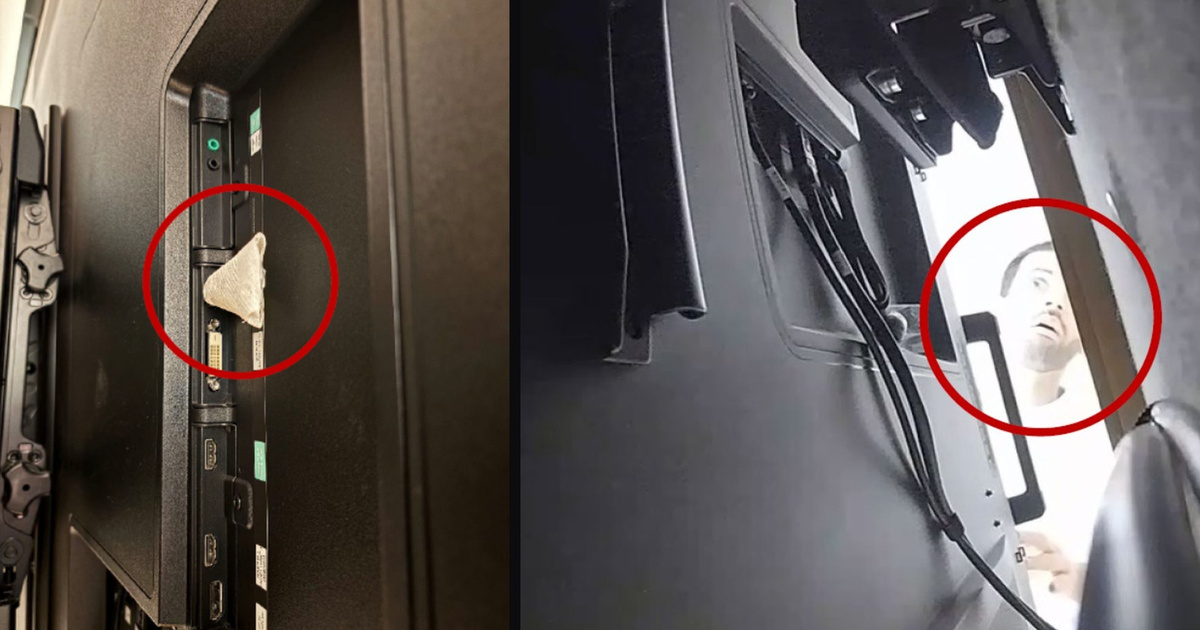
According to the Justice Department, Abdulrahman Alfozan, 35, an OpenAI engineer since July 2025, planted a recorder in an executive conference room around September 28. Staff found it on September 30, hidden in toilet paper behind a TV. OpenAI says it used its own models to trace the device to him.
Between September 24 and 30, a chatbot account tied to his spouse, sharing identifiers with his own, asked how to build a continuous audio recorder and encrypt its SD card. On October 5 cameras filmed him looking behind the same TV. He was arrested on October 9, OpenAI says it fired him, and he faces up to 5 years in prison.
My lesson as a founder is simple. Anything an employee types into a work tool can be read by the employer. Anything anyone types into a chatbot can be read by its provider and, with a warrant, by the police. OpenAI says it found no sign he took model weights, source code or customer data.
Does Deleting Your ChatGPT Chats Protect You?
Partly. A deleted chat is scheduled for permanent deletion within 30 days. Temporary Chat keeps a copy for up to 30 days for safety. Both rules have the same exception: OpenAI keeps data longer when the law requires it.
That exception is real. In 2025 a court order in the New York Times lawsuit forced OpenAI to keep deleted chats. The order ended on September 26, 2025, but OpenAI said in October 2025 that data from April to September 2025 stays stored under lock. On Enterprise and Edu plans, your admins set how long chats are kept.
Is Claude or Gemini Different?
The rules look similar. OpenAI's volume is 14 times bigger: Anthropic received 22 government requests for Claude users in the same six months, and disclosed data in 9. Google does not report Gemini separately, and keeps chats reviewed by humans for up to three years even after you delete them.
| ChatGPT (OpenAI) | Claude (Anthropic) | Gemini (Google) | |
|---|---|---|---|
| Government requests, Jul to Dec 2025 | 309, data disclosed in 209 | 22, data disclosed in 9 | Not reported for Gemini alone |
| Chat content requests | 75 | 2 | Not reported |
| Tells users about requests | Yes, unless prohibited | Yes, unless prohibited | Under Google's user data request policy |
| Default chat retention | Until you delete, then 30 days | Until you delete, then 30 days | Auto-delete after 18 months |
For the wider choice between the two main assistants, read my comparison of Claude vs ChatGPT for business.
Anthropic has its own rules on what users can do with Claude, covered in my piece on the Anthropic usage policy.
What Should You Do About It?
Treat every prompt like an email a judge may read one day. Five habits cover most of the risk for a founder or sales team.
- Use a Business or Enterprise plan for company work, so admins control retention.
- Keep client secrets, health data and passwords out of personal accounts.
- Do not count on Temporary Chat or deletion as a shield: legal holds beat both.
- Write a one-page AI policy that says which tools staff may use for what.
- Check your offices too. The recorder at OpenAI sat behind a TV for two days.
Want AI working inside your outbound with rules like these built in? Our B2B lead generation service runs agents on the routine work and people on the calls.
Frequently asked questions
Does ChatGPT report to police?
Rarely, and only for imminent, credible threats of harm to others after a human review. In 2025 OpenAI said it was not referring self-harm cases. Police can still request your data with a subpoena or warrant: OpenAI received 309 government requests between July and December 2025 and disclosed data in 209 of them.
Does ChatGPT report illegal activity?
Not as a general rule. OpenAI bans accounts that break its policies, and most enforcement stays between OpenAI and the user. It contacts police for credible threats to others and reports child sexual abuse material to NCMEC, as US law requires. Other crimes surface when police come with legal process.
Can police see deleted ChatGPT chats?
Sometimes. Deleted chats are removed within 30 days, so a warrant served after that may find nothing. Police can ask OpenAI to preserve data for 90 days, plus 90 more, and court orders can force OpenAI to keep chats, as the New York Times lawsuit did in 2025.
Does ChatGPT report you to your school or employer?
OpenAI does not send reports to schools or employers. On Edu, Business and Enterprise plans, though, the organization's admins control retention, and eligible Enterprise workspaces can export chats through the Compliance API, temporary chats included for 30 days. Treat a work or school account as visible to that organization.
Does OpenAI tell you if police ask for your data?
Usually. OpenAI's policy says it notifies users before disclosing data to a government, unless the law prohibits it or an emergency makes notice dangerous. A gag order from a court can stop the notice, so silence does not prove that nobody asked.
Sources
OpenAI, Government User Data Request Policy, effective January 1, 2026, read October 14, 2026.
OpenAI, Report on Government Requests for User Data, July to December 2025, read October 14, 2026.
OpenAI, Report on Government Requests for User Data, January to June 2025, read October 14, 2026.
OpenAI, Report on Government Requests for User Data, July to December 2024, read October 14, 2026.
OpenAI, Child safety report, July to December 2025, read October 14, 2026.
OpenAI, Our commitment to community safety, 2026, read October 14, 2026.
OpenAI, Helping people when they need it most, August 26, 2025.
OpenAI, Letter to Canadian ministers, February 26, 2026.
OpenAI, How we're responding to The New York Times' data demands, updated October 22, 2025.
OpenAI Help Center, How to delete and archive chats, read October 14, 2026.
OpenAI Help Center, Temporary Chat FAQ, read October 14, 2026.
U.S. Department of Justice, Saudi National Arrested for Installing Surreptitious Audio Recording Device at OpenAI, October 13, 2026.
Help Net Security, OpenAI engineer arrested for allegedly trying to eavesdrop on executive meetings, October 14, 2026.
Anthropic, Transparency Hub, government requests, read October 14, 2026.
Anthropic, How long do you store my data?, read October 14, 2026.
Google, Gemini Apps Privacy Hub, read October 14, 2026.
TechCrunch, Sam Altman warns there's no legal confidentiality when using ChatGPT as a therapist, July 25, 2025.
Forbes, OpenAI ordered to unmask writer of prompts, October 20, 2025.
CNN, Palisades Fire suspect, October 11, 2025.
NC Lawyers Weekly, Florida man told ChatGPT he'd murder his ex; OpenAI alerted the FBI, August 17, 2026.
Federico Donatone, An OpenAI engineer spied on his bosses, LinkedIn, October 14, 2026.


