
Last week I wrote that I had cut my sales tech stack from 12 prospecting tools to 6 and nothing broke. The post drew 340 reactions and 136 comments. The useful number sat deeper in the story: I ran the surviving workflow on about 1,000 leads before cancelling anything. That test matters more than the tool count, because a cheaper stack is worthless if it quietly loses the records that become conversations.
I run Growth Cab, a go to market advisory. We build outbound and data systems for B2B teams selling high-value contracts, so every weak handoff eventually shows up in pipeline. Our old setup needed five exports to move one lead from found to emailed. Six subscriptions were doing logistics around the work. Consolidation became a process question: which jobs must survive, and how do we prove they survived?
 in
in
“I deleted 6 of my 12 prospecting tools. Nothing broke. Here are the 7 jobs still running on one login.”
Sales Tech Stack Consolidation Starts With the Jobs
The usual audit begins with vendor names and monthly prices. I begin with jobs. A logo on a billing statement tells you very little about what breaks when the subscription disappears. Write down the outcome each tool produces, who consumes it, and which system receives it next. That turns a pile of software into a workflow you can test.
Our prospecting stack had seven jobs: build fresh lead lists, export saved Sales Navigator searches, find work emails, find triple-verified mobile numbers, enrich incomplete CSVs, catch bad emails before they hit a domain, and detect buying signals such as a CEO change. Those jobs were distributed across subscriptions, browser tabs, exports, and people remembering which file came next.
The waste was hiding between the tools. Every export created another file to name, clean, join, and upload. Every join introduced duplicates and blank fields. Five exports sounded like minor friction until we counted the time, the failure points, and the leads left behind. The subscription total was only one part of the cost. The handoffs were the larger tax.
I run the same job-first test on every AI subscription. My list of AI tools for small business shows the fifteen that earned a place.
The 1,000-Lead Test Before You Cancel Anything
I kept the old stack running and sent the same representative batch through both paths. The sample included common job titles, harder geographies, companies of different sizes, and records with deliberately missing fields. A convenient sample would have produced a convenient answer. A representative one exposed whether the replacement could handle the messy cases that create support work later.
The scorecard tracked usable work emails, verified mobile coverage, invalid-email rate, duplicate records, missing required fields, time to a campaign-ready file, and manual touches per hundred leads. It also tracked whether saved Sales Navigator lists exported correctly and whether buying signals arrived with enough context for a rep to act. A single coverage percentage would have hidden most of the risk.
We cancelled a tool only after its job produced equal or better output in the consolidated path across the full batch. That sequence protected the workflow while the test was still uncertain. It also made rollback simple. If one job failed, its old subscription was still available while we fixed the gap or kept that specialist tool.
Build a Sales Tech Stack Consolidation Audit
A useful audit fits in one sheet. Give every row a tool, monthly cost, owner, jobs performed, inputs, outputs, next destination, manual steps, and the metric that proves the job worked. Add renewal date and export options. The result should show duplicate work immediately: two vendors enriching the same field, three databases sourcing the same accounts, or a person bridging systems with CSVs.
Then calculate cost per usable lead instead of cost per credit. Credits are a vendor unit. A usable lead is a record that meets your targeting rules, has the contact fields your channel needs, passes validation, and can enter the next system without repair. A cheap credit becomes expensive when half the records require another provider or ten minutes of cleanup.
For the same batch and period, calculate cost per accepted record as tool charges plus verification charges plus review hours multiplied by a stated hourly cost, divided by records accepted into the next system. Keep targeting rules and required fields identical in both paths. Count a rejected or duplicate record once in the failure log, never as a usable lead. If no records pass, report the test as failed rather than dividing by zero.
Shortlist replacements by their job in the GTM tools directory, then run the same acceptance test on each candidate. Keep data coverage, sending infrastructure and the CRM as separate decisions even when one vendor offers several of them.
Time belongs in the same calculation. Count how long it takes from saving a list to having a campaign-ready file. Count manual touches and exception handling. If consolidation removes four exports but costs slightly more per lookup, it may still win because the operator gets hours back and the campaign launches sooner. The goal is lower workflow cost with stable output quality.
I apply the same logic to AI in my guide to AI for sales prospecting, where the number that counts is cost per booked meeting.
Seat rules distort the math as well. My Guideless review shows how billing per creator, with free viewers, changes what a training tool costs a team.
What One Login Still Has to Preserve
The surviving system has to preserve coverage and control across every job. A pricing page full of features provides weak evidence. List building should use data fresh enough for the market you target. Email and phone results need clear verification status. CSV enrichment should retain source columns and return failures explicitly. Validation should happen before a record reaches sending infrastructure.
Signals need the same scrutiny. A CEO change has value only when it is current, attached to the right company, and delivered while the account is worth contacting. More signal categories can create more noise. We kept the events that changed who we contacted or what we said, then removed feeds that looked interesting but never changed an action.
Data portability is part of the job. Export a clean copy of leads, verification results, source fields, and timestamps before removing a vendor. Document field mappings and keep a rollback window through the next live campaign. Consolidation earns trust when another operator can follow the path without relying on the person who designed it.
Where Sales Tech Stack Consolidation Breaks
The first failure is concentration risk. One login creates fewer handoffs and a larger blast radius. An outage, pricing change, policy change, or coverage drop can affect several jobs at once. Keep periodic exports, monitor critical metrics by job, and know which specialist provider can be restored. Convenience should never erase an exit route.
The second failure is confusing feature availability with output quality. Two vendors can both claim email finding while producing different coverage in your geography and segment. The same applies to phone verification and company signals. Your own representative batch is the evidence. A demo dataset and a broad benchmark cannot answer for your market.
The third failure is forcing every revenue system into the same product. We consolidated prospecting jobs. We kept the CRM as the system of record, protected sending infrastructure separately, and left compliance decisions with accountable humans. One login can simplify a stage of the workflow. It should not become permission to collapse every control boundary.
The Rule I Use Before Deleting a Tool
I require three proofs. Every important job has an owner and a success metric. The replacement has processed a representative batch beside the current stack. The team has completed one live campaign with stable quality, documented mappings, and a rollback path. A lower invoice is welcome after those proofs. Before them, it is only a promise.
That is how six subscriptions disappeared without breaking the work. Seven jobs, their handoffs, and their quality thresholds defined the workflow. Once those were visible and tested on about 1,000 leads, the redundant logistics became safe to remove. Evidence about the jobs, handoffs, and output quality made a smaller stack possible.
Every Thursday, AI Frontier gives you one signal, my read on it, and one practical play from the AI and go to market systems we run inside Growth Cab, all in under five minutes. Drop your email below and confirm your subscription to get the next edition. If your stack has a handoff you cannot explain, send it to me on LinkedIn. I answer everything.
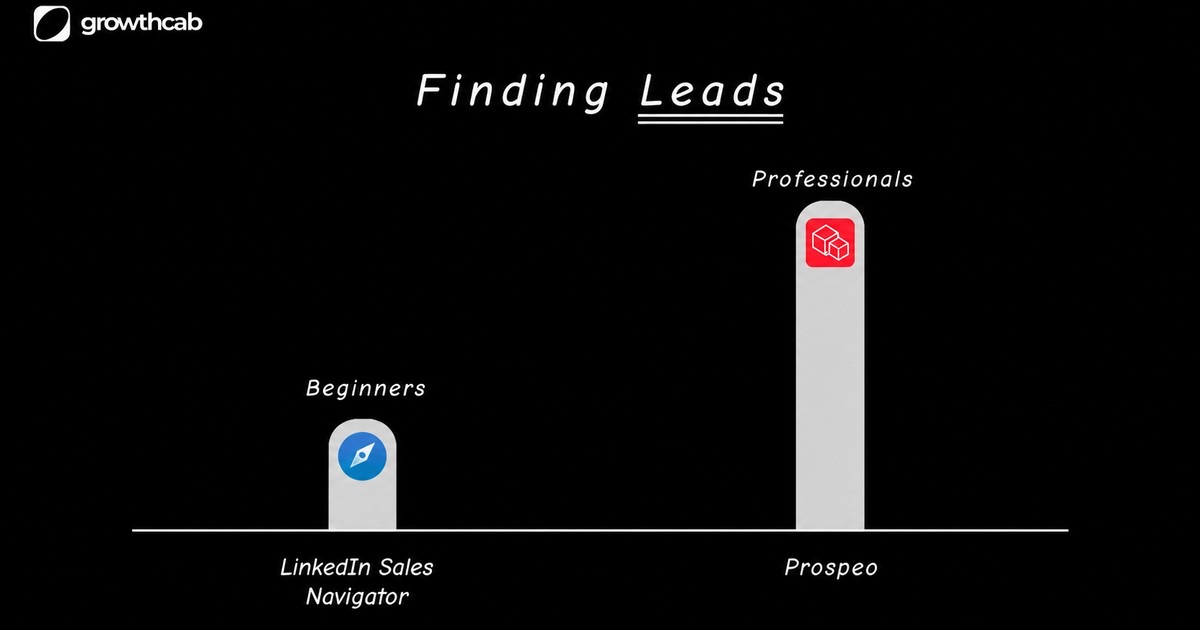
Disclosure: this article mentions Prospeo, a tool Growth Cab uses and partners with. The test method, limits, and opinions here are my own.
Map the remaining systems against the AI GTM stack architecture so cutting a subscription does not remove a required handoff.


