







An AI moratorium is a legal freeze on part of artificial intelligence: building it, training it or powering it. After the November 3, 2026 midterms, Democrats are pushing 3 at once. A pause on models trained above 10^25 operations, a permanent ban on superintelligence, and a stop on new AI data centers. None of them is law.
On November 6, 2026 I posted on LinkedIn the 8 facts behind the Democrats' AI freeze. Here I read the 2 bills behind it line by line on govinfo.gov, check what the word moratorium has meant in Washington since 2025, and work out what it changes for a company that runs on AI.
- Ban Artificial Superintelligence Act (S. 5493, H.R. 10538): pauses training, fine-tuning and new releases of every model above 10^25 operations until a new Department of AI writes its rules.
- Penalties: up to 20 years in prison for people in policymaking roles at licensed companies, or outsiders, who recklessly break it. Other employees risk a 10-year ban from the industry.
- AI Data Center Moratorium Act (S. 4214, H.R. 9442): no new or upgraded AI data centers above 20 megawatts until Congress passes a law that meets its conditions and ends the freeze by name.
- Timing: the new Congress sits on January 3, 2027. Democrats hold at least 54 Senate seats, short of the 60 that end a filibuster and the 67 that override a veto.
- Markets moved first: on November 5 Nvidia fell 9.26% and the Nasdaq 5.52%.
 in
“Democrats want to freeze AI. The details are wild.”
What Is an AI Moratorium?
An AI moratorium is a temporary or permanent stop on an AI activity, set by law, order or policy. In US politics the phrase has carried 4 different meanings in 18 months. In 2025 it meant the opposite of today: a freeze on state AI laws, pushed by Republicans to stop a patchwork of state rules. Today it means a freeze on AI itself.
Before all 4, the phrase spread in March 2023, when more than 1,000 tech leaders signed an open letter asking labs to pause training systems more powerful than GPT-4 for 6 months. The data center bill quotes that letter.
| Moratorium | What it freezes | Who pushes it | Status |
|---|---|---|---|
| Pause on advanced AI | Training, fine-tuning and release of models above 10^25 operations | Sanders, Casar, Ansari (S. 5493, H.R. 10538) | Introduced September 23-24, 2026. Not law |
| Ban on superintelligence | Any system above human ability across most tasks, or showing precursor traits, with no end date | Same bill | Introduced. Not law |
| AI data center moratorium | Construction and upgrades of AI data centers | Sanders, Ocasio-Cortez (S. 4214, H.R. 9442), several governors-elect | Introduced March 25 and June 24, 2026. Not law |
| Moratorium on state AI laws | States' power to regulate AI for 10 years | Republican budget bill, 2025 | Struck by the Senate 99-1 on July 1, 2025 |
There are smaller ones too. New York City froze student-facing generative AI for grades 2-K to 8 for the 2026-2027 school year, about 600,000 students. When someone says AI moratorium, ask which one. The answer changes who is affected and how likely it is to happen.

What Would the Ban Artificial Superintelligence Act Pause?
The bill pauses every AI model trained on 10^25 or more operations. Under the pause a model cannot be trained, modified or fine-tuned, and no unreleased model can ship. The pause ends only when a new Department of Artificial Intelligence is fully staffed and has issued safety rules. The bill sets no date for that.
10^25 is a mainstream line. GPT-4 crossed it in March 2023 at about 2.1 x 10^25, and Epoch AI counted more than 30 models from 12 developers above it by June 2025. The EU AI Act uses the same line to mark general-purpose models with systemic risk. So the pause would cover every frontier lab, and the Secretary would adjust the threshold every year.
From the day the law passes, developing or distributing any model above the line needs a federal charter. Releasing one needs pre-deployment approval. The Department gets full access to systems, staff and buildings.
Superintelligence is banned outright: building it, owning it, funding it or importing it. A system that shows warning signs, like self-improvement or hiding from oversight, gets paused and cut off from the internet. If the Department cannot confirm the warning signs are gone within 30 days, the system is destroyed.
Here is the part my post simplified. The 20 years are for policymaking people at a licensed company, or outsiders, who recklessly break the pause, the ban or the charter rules. Employees without a policy role risk a 10-year ban from the AI industry instead. A company that loses its charter can forfeit its intellectual property and assets.
What Does the AI Data Center Moratorium Act Stop?
The data center bill stops construction and upgrades of AI data centers from the day it passes. It covers sites used to run AI models at scale, or sites above 20 megawatts built for 20 kilowatts per rack or liquid cooling. That describes almost every new AI campus. Ordinary office server rooms stay outside.
The freeze ends only when Congress passes a law that ends it by name and does 3 things. First, federal approval of AI products before release. Second, policies against AI job losses and a share of AI wealth for the public. Third, rules for every new site. It must keep power bills flat and spare the climate. Locals vote on it. It gets no subsidies and uses union jobs.
The bill also bans chip exports for AI use to countries without comparable laws.
Will the AI Moratorium Become Law?
The AI moratorium bills will not become law in 2026, and probably not as written in 2027. The bills were filed in the 119th Congress, which ends on January 3, 2027. Every bill not passed by then dies and must be filed again. So the real start is the 120th Congress, where Democrats will hold at least 54 Senate seats and more than 250 House seats.
54 seats are not enough to pass a bill against a filibuster. That takes 60 votes, unless Democrats change the Senate rules. Then President Trump can veto, and an override needs 2/3 of both chambers: 67 senators and 290 House members. Trump has pushed the other way since his December 11, 2025 executive order against state AI laws.
The faster freeze is local. Texas governor-elect Gina Hinojosa promised a moratorium on all data center approvals until laws are passed, and Texas holds 27% of planned US data center capacity. Fortune counted 41 ballot measures to slow data center buildouts on November 3, and most of them passed. My read: the states and the power grid will move before Washington does.
Why Did Nvidia Stock Fall After the Midterms?
Nvidia fell because investors priced in a slower AI buildout. On Thursday, November 5, 2026 Nvidia closed down 9.26% at $181.60. The Nasdaq fell 5.52%, the S&P 500 4.36%, and the iShares Semiconductor ETF more than 12%, its worst day since March 2020. Fortune put the loss near $3 trillion of market value.
The trigger was a mix. Ansari's Day 1 pause post, Sanders' call for a national data center moratorium, and Democratic wins in data center states. Elon Musk answered Ansari with 5 words: "It's a Brave New World." Nobody voted on anything that day. The drop was about what Congress could do in January.
For the AI company with the most to lose from a pause, I broke down Anthropic's market cap before its IPO.
Would a US AI Pause Hand the Race to China?
The main argument against the bill is China. Critics say a US-only pause freezes American labs while Chinese labs keep training. The R Street Institute called the bill AI authoritarianism. The superintelligence bill answers with diplomacy and chips: international agreements to stop superintelligence, and export controls. The data center bill adds a ban on exporting AI hardware to countries without comparable laws.
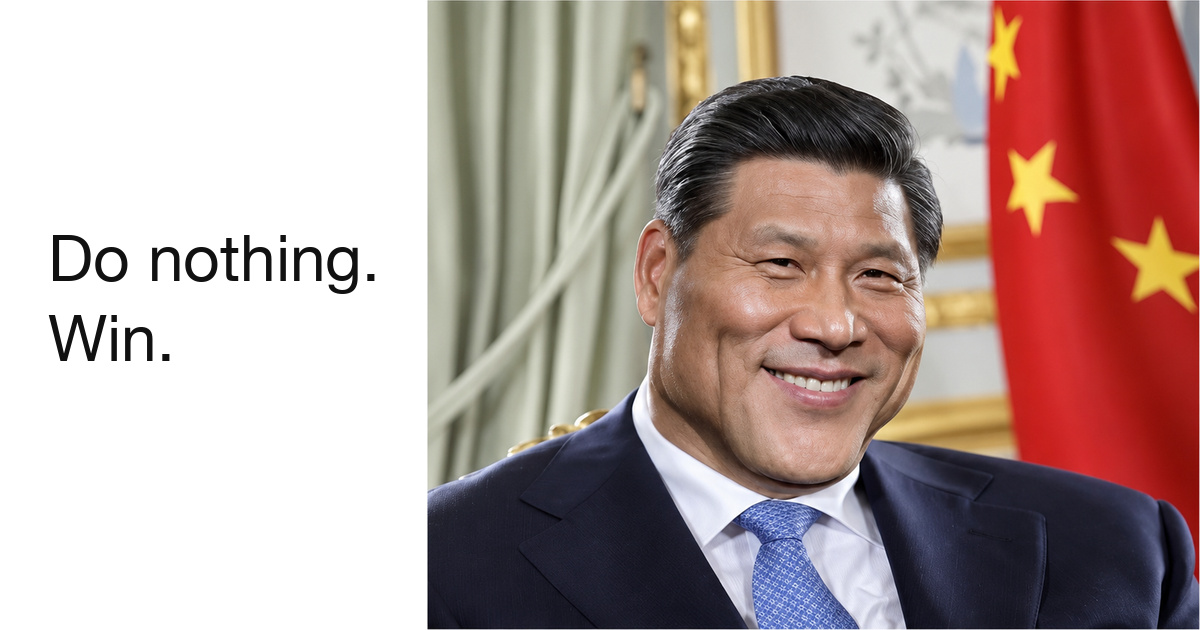
I don't think export controls close the gap. Chinese labs already ship strong open models, which I compared in the best Chinese AI models of 2026. A pause would stop American training, while a chip ban only slows everyone else. That asymmetry is why the meme in my post says "Do nothing. Win."
The other side has a point too. The data center bill's own findings quote Dario Amodei and Demis Hassabis saying in 2026 they would slow down if other countries did. A pause tied to a treaty is a different idea from a pause alone. Today's text starts the US pause first and asks for the treaty later.
If you want to judge superintelligence claims yourself, here is how to read an AGI benchmark without falling for the headline.
What Should a Company Using AI Do Now?
Nothing changes for your AI tools this year. Claude, ChatGPT and Gemini keep working, and the Congress that could pass these bills only sits from January 3, 2027. My team runs its sales and marketing on Claude every day, and we are not changing a single workflow because of this news.
What I would do is make the stack portable. Keep prompts, agents and data in files you own, so you can move between providers in a day. If a pause ever freezes new models, the ones already in your workflows matter more than the next release. One open point: Section 12 requires a charter to distribute any model above the line, which reads like it covers models already serving customers. The text does not say.
Before you plan around price changes, check Claude's current plans and prices.
And if you want AI running inside your sales team in a way that survives any vendor, this is how we run go-to-market consulting at Growth Cab.
Frequently asked questions
Is there an AI moratorium in the US?
No federal AI moratorium is in force as of November 6, 2026. 2 bills would create one: the Ban Artificial Superintelligence Act pauses models above 10^25 operations, and the AI Data Center Moratorium Act stops new AI data centers. Both were filed in 2026 and neither is law.
What was the AI moratorium in the One Big Beautiful Bill?
It was a 2025 Republican provision that would have stopped states from enforcing AI laws for 10 years, tied to federal BEAD broadband funding. The Senate struck it 99-1 on July 1, 2025. It froze AI regulation, the opposite of the 2026 Democratic bills that freeze AI development.
Will AI be banned in the US?
Ordinary AI tools are not banned by name. The Sanders-Casar bill bans superintelligence and any system with precursor traits, like automating AI research or helping design weapons. It pauses the largest models until new safety rules exist. It needs 60 Senate votes and a presidential signature, or 2/3 of both chambers to override a veto.
What happens to the AI moratorium bills in January 2027?
They expire. Bills from the 119th Congress die when it ends on January 3, 2027. Sponsors must file them again in the 120th Congress, where Democrats hold the majority. The text can change, and committees decide which version moves first.
What is the 10^25 FLOP threshold?
It is the training compute line, 10 to the power of 25 operations, that the Sanders-Casar bill uses to define advanced AI. GPT-4 was trained on about 2.1 x 10^25. The EU AI Act uses the same number for models with systemic risk.
Sources
US Senate, S. 5493, Ban Artificial Superintelligence Act of 2026, introduced September 23, 2026, text read on govinfo.gov November 6, 2026.
US Senate, S. 4214, Artificial Intelligence Data Center Moratorium Act, introduced March 25, 2026, text read November 6, 2026.
Rep. Alexandria Ocasio-Cortez, House version of the AI Data Center Moratorium Act, June 24, 2026.
CNBC, Top Democrats call to rein in AI buildout after midterms sweep, November 5, 2026.
Stocktitan, The stock market today, November 5, 2026, closing figures.
Fortune, The best post-midterm rally in 44 years lasted one day, November 5, 2026.
CNN, 2026 midterm election results: Democrats projected to win over 250 House seats, November 5, 2026.
Nextgov/FCW, Senate passes amendment removing state AI moratorium, July 1, 2025.
CNN, Trump signs executive order blocking states from enforcing their own AI regulations, December 11, 2025.
Epoch AI, Over 30 AI models have been trained at the scale of GPT-4, updated June 6, 2025.
European Union, Regulation (EU) 2024/1689, the AI Act, Article 51 (10^25 FLOP presumption of systemic risk).
Rep. Yassamin Ansari, Day 1 post on X, November 4, 2026.
Elon Musk, reply to Ansari on X, November 5, 2026.
R Street Institute, The Sanders-Casar Ban Artificial Superintelligence Act is AI authoritarianism.
NYC Mayor's Office, Generative AI moratorium in schools, September 2, 2026.
Federico Donatone, Democrats want to freeze AI. The details are wild., LinkedIn, November 6, 2026.


