








Cold email personalization means the evidence in each email changes the pitch for that buyer. At scale, it requires a repeatable way to preserve evidence, review decisions and exclusions across a batch. A good individual draft is the starting point. The campaign process must also prevent duplicate handling, keep versions traceable and make weak records visible before they reach the next authorized step.
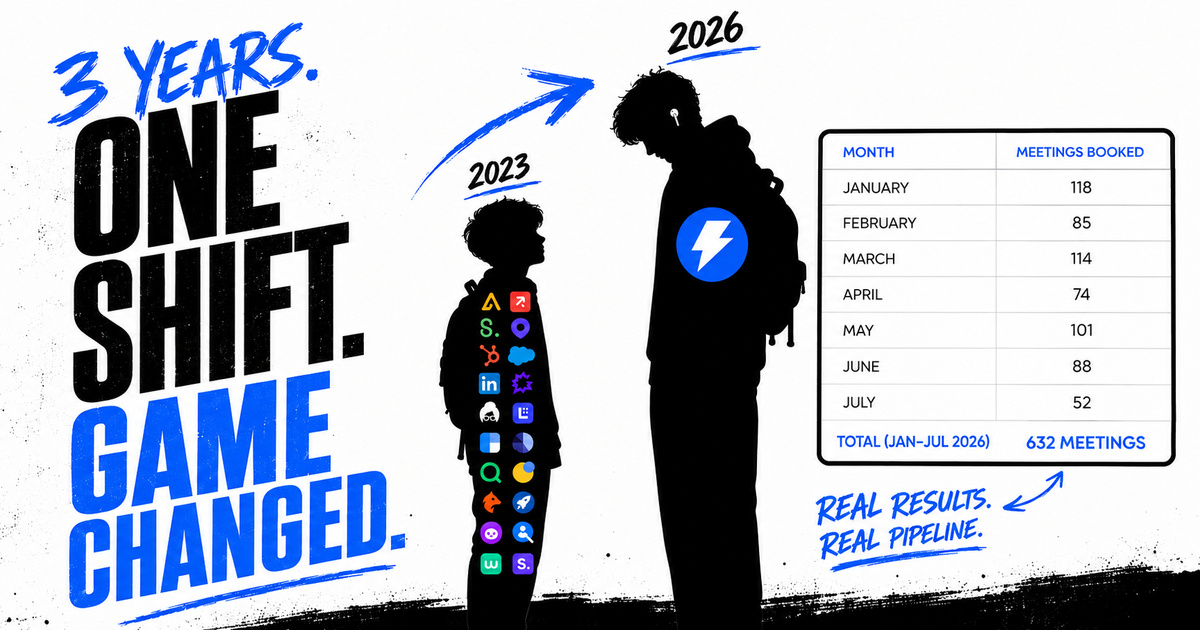
The original post reported 689 meetings for the broader outbound motion. That historical number is not a controlled test of personalization and is not a forecast for this workflow. This guide focuses on batch quality and operations, with illustrative test cases rather than a promised conversion uplift.
 in
in
“Our outbound motion booked 689 meetings so far this year. The unfair advantage is HOW we booked them: Every email is written for exactly one person.”
Cold Email Personalization at Scale Starts With a Reason
A personalized email needs a reason to exist for this buyer now. A first name, job title or company token proves that a row was merged. It does not explain why the sender chose the account, why the offer fits or why the conversation deserves thirty minutes. The message becomes specific only when its evidence changes the substance of the pitch.
Start with an observable signal. Recent company news, a product launch, a hiring pattern, a new market, a public customer story or a change on the website can create a legitimate opening. The signal must be current enough to matter, clear enough to verify and connected to a business consequence your offer can address.
Then write the connection in plain language. If a company opened a new region, explain which part of its go to market motion may become harder. If it hired ten account executives, explain where pipeline coverage or onboarding pressure could appear. The prospect should be able to follow the chain from evidence to problem to offer without accepting a hidden assumption.
The Four Inputs Behind Each Message
The first input is fresh account context. Our agent looks for company and prospect news from recent days. Recency matters because an old funding announcement copied into an opener feels automated immediately. Store the source URL and date beside the fact. If the evidence cannot survive a click, it should never become a claim in an email.
The second input is the company's own website. Read the product, positioning, customer examples and conversion path. The goal is to understand how the business creates value and where a relevant offer could attach. Website research is more useful than a compliment because it gives the message a commercial foundation the buyer can recognize.
The third input is a bounded estimate of potential ROI and time to value. Bounded is the important word. Use transparent assumptions, label ranges and explain what would need to be true. A fabricated revenue promise can make a message sound precise while destroying trust. A credible estimate gives the buyer a hypothesis worth examining together.
The fourth input is the offer itself. Personalization fails when the research is specific but the proposed help remains generic. Connect one capability to the situation you found. Name the first useful outcome, the likely path and the evidence you would inspect on a call. The offer should become narrower as the research becomes better.
Apply One Review Rubric Across the Batch
Use the same acceptance criteria for each record: supported evidence, an explicit offer connection, visible assumptions and an appropriate ask. Record a rejection reason when the draft fails. Compare first-pass acceptance and repair effort across segments instead of accepting weaker evidence simply because one segment is harder to research.
Use the single-email review guide for the worked draft example and the limits of the swap test. Here the task is to apply that review consistently across records.
If an agency writes your emails, score three real emails it sent last month with the same rubric. Then work through the other seven questions to ask an agency before you hire it.
Prevent Duplicate and Conflicting Actions
Give each account, contact and proposed action a stable identifier. Importing the same record twice should not create two outreach tasks. Preserve exclusions and the last confirmed interaction across imports. If two people or systems own the same contact, resolve that conflict before allowing either pending action to continue.
Bind the accepted draft to the research and instruction versions used to produce it. A changed source or offer can invalidate a previous approval. Keep uncertain outcomes separate from failures: after a timeout, verify the actual action state before retrying so the same approved message cannot be delivered twice.
Give the AI a Research Contract
An AI agent needs a contract before it needs a clever prompt. Define approved sources, maximum age for news, required citations, prohibited claims, output fields and confidence rules. Require separate fields for evidence, inference and proposed copy. That separation makes it easier for a reviewer to catch a sentence that sounds factual but was actually invented between two facts.
My guide to choosing between a prompt and an agent explains when one prompt is enough and when the research needs tools and feedback.
Make the agent show its work in a compact research record. Include the signal, source, date, relevant website passage, hypothesized business consequence, offer connection, ROI assumptions and proposed ask. The email can stay short because the reasoning lives behind it. A reviewer should be able to accept or reject the draft without repeating the research from zero.
Keep sending permission outside the drafting model until the workflow proves itself. Let the agent research and propose. Let deterministic checks confirm required fields, links, exclusions and duplicate handling. Let a person approve claims with commercial or reputational risk. Automation should remove repeatable effort while preserving accountability at the decision that reaches a buyer.
Measure the System Behind the Copy
Track coverage first. What percentage of eligible prospects produced a recent, verifiable signal and a coherent offer connection? A system that drafts for every row can look productive while quietly lowering quality on the half of the list with weak evidence. It is acceptable to send fewer emails when the rejected records never had a genuine reason for contact.
Track acceptance and correction next. Measure how many drafts pass the first review, which fields people edit and why messages fail the swap test. Review time belongs beside those numbers. If a reviewer needs five minutes to reconstruct every claim, the agent produced prose instead of leverage.
Then connect quality to outcomes: delivered messages, positive replies, qualified conversations, show rate and opportunities accepted by sales. Compare cohorts with similar account value and offer fit. Do not turn one campaign into universal proof. The purpose is to learn whether stronger evidence and a more specific ask improve this motion under comparable conditions.
Where Cold Email Personalization Breaks at Scale
The first limit is weak targeting. Perfect research cannot make an irrelevant offer valuable. If the account has no plausible need, personalization becomes an elaborate way to explain why the email should never have been sent. Fix the market, account criteria and offer before adding more research tokens.
The second limit is stale or sensitive data. Public information can still be outdated, incorrectly attributed or inappropriate to use. Avoid personal details that have no commercial relevance. Respect exclusions, consent requirements and regional rules. The standard is useful context that a professional would be comfortable explaining directly to the buyer.
The third limit is fake precision. AI can turn weak evidence into confident ROI math and polished claims. Keep assumptions visible, use ranges and route unusual claims to a person. A shorter email with one defensible connection earns more trust than a detailed forecast built on numbers nobody checked.
The fourth limit is deliverability. Great copy cannot rescue damaged domains, bad lists or aggressive volume. Keep data verification, sender reputation, infrastructure and suppression rules as separate operating layers. Personalization improves the conversation after delivery. It does not grant permission to ignore the engineering that gets a legitimate message into the inbox.
The cold email deliverability checklist covers that side: provider rules, list verification and daily volume per mailbox.
Our GTM tools page compares the sequencers and the deliverability infrastructure we use, with starting prices and the test to run before you pay.
If Smartlead is your sequencer, my Smartlead pricing breakdown shows what the plan, mailboxes and domains cost together.
Test the Batch Before Increasing Volume
Build an illustrative test set containing a complete account, missing evidence, a stale source, a duplicate person, a conflicting owner and an exclusion. Define which records should advance and which should stop. Run the batch without external sends, then check record counts, states, accepted drafts and reasons for rejection.
Introduce a timeout and repeat the import. Verify that previously completed work remains completed, uncertain actions remain under review and excluded people stay excluded. These tests assess workflow behavior. Sales effectiveness requires separate evidence. Any authorized live pilot still needs separate review of actual delivery and buyer responses.
This post was produced in partnership with Instantly. The operating lessons and opinions are mine. Every Wednesday, AI Frontier gives you one signal, my read on it and one practical play from the AI and go to market systems we run inside Growth Cab. The original post and discussion are on LinkedIn. If your current cold email survives the swap test, send me the line that makes it specific.
The AI SDR responsibility guide defines who owns research, approval, external actions and live replies.


